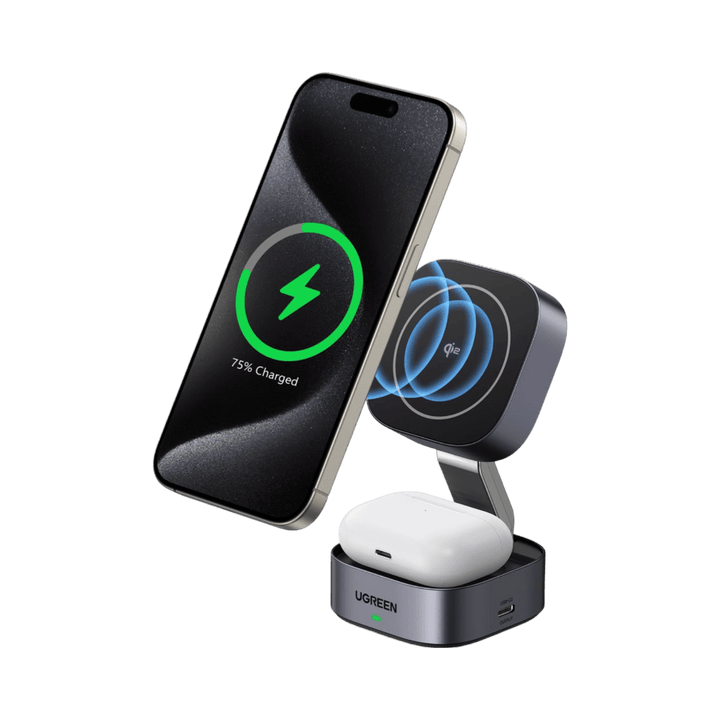
The Future of Power: Exploring the Benefits of Wireless Charging
As we continue to embrace the digital age, wireless charging is emerging as a revolutionary technology that promises to change the way we power our devices. This innovation eliminates the clutter of tangled cords and enhances convenience, allowing users to power up their smartphones, smartwatches, and other electronics with ease. The future of power lies not only in the ability to charge devices without physical connections but also in the potential for increased efficiency and safety. Imagine a world where your devices remain charged as you move around your home or office, seamlessly recharging whenever they are placed on a designated surface.
Moreover, the environmental impact of wireless charging cannot be overlooked. By reducing the need for multiple chargers and cables, this technology minimizes electronic waste and promotes more sustainable practices. As advancements continue in the development of long-range wireless charging solutions, the benefits extend beyond personal devices to include electric vehicles and public spaces. The future of power is bright, offering the promise of a more interconnected, efficient, and eco-friendly ecosystem where power is just a touch away.
Counter-Strike is a renowned tactical first-person shooter that has captivated gamers since its release in 1999. Players engage in team-based gameplay, where one team takes on the role of terrorists and the other as counter-terrorists, aiming to complete objectives or eliminate the opposing team. The game emphasizes strategy, communication, and skill, making it a staple in the competitive gaming scene. If you're looking for some great gear to complement your gameplay, check out the Top 10 iphone slim cases available online!
How Wireless Charging Works: A Comprehensive Guide
Wireless charging is a technology that allows you to charge devices without the need for physical connectors. This method primarily works through the principle of electromagnetic induction, which involves transferring energy between two objects through magnetic fields. In a typical setup, a charging pad is connected to a power source and uses an electromagnetic coil to generate an alternating magnetic field. When a compatible device is placed on the pad, it contains a similar coil that captures the generated energy, converting it back into electrical energy to recharge the device's battery.
There are several standards for wireless charging, with the most prominent being the Qi standard. Qi supports both inductive charging and resonant charging, which can work at greater distances. Additionally, many modern smartphones and other devices come equipped with built-in wireless charging capabilities, making the technology more accessible than ever. As wireless charging continues to advance, you may also find fast charging variations that can significantly reduce the time it takes to replenish your device's battery compared to conventional wired chargers.
Is Wireless Charging Right for You? Key Considerations and Tips
Wireless charging has rapidly gained popularity as a convenient alternative to traditional charging methods, but is it right for you? Before making the switch, consider factors such as compatibility with your devices, the charging speed, and the type of wireless charger available. Many modern smartphones and gadgets support wireless charging, but it's essential to verify if your specific model is compatible. Additionally, keep in mind that wireless charging may be slower than wired alternatives, which could be a significant consideration if you frequently need quick power-ups.
Another important aspect to contemplate is the placement and convenience of your wireless charger. If you often work at a desk or have a designated charging station at home, a wireless charger can offer a clutter-free solution. However, if you are on the go, needing a portable charger or having a vehicle with a built-in wireless charging pad may be more beneficial. To make an informed choice, it's advisable to evaluate your lifestyle and how often you rely on your devices. Consider these tips:
- Check device compatibility.
- Assess your charging frequency and speed needs.
- Choose a charger that fits your space and lifestyle.