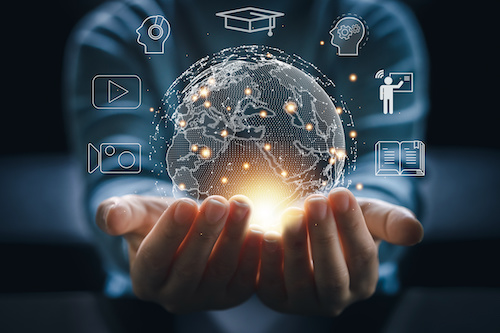
The Rise of Virtual Reality: How It's Transforming Our Perception of the World
The rise of Virtual Reality (VR) has heralded a new era in technology, one that is fundamentally altering how we perceive and interact with the world around us. As VR technology becomes more advanced and accessible, its applications extend beyond gaming and entertainment into fields such as education, healthcare, and real estate. For instance, VR simulations can provide immersive learning experiences for students, allowing them to explore historical events or scientific phenomena firsthand. In healthcare, VR is proving to be an invaluable tool for training medical professionals and for therapies, particularly in mental health treatments.
Furthermore, the impact of Virtual Reality on our perception of reality raises important questions about its implications for social interaction and human experience. With the ability to create completely immersive environments, users can experience alternate realities that may challenge their understanding of the physical world. As VR technology continues to evolve, we are likely to see an increase in its integration into daily life, prompting a shift in how we communicate, socialize, and engage with content. The question remains: will this transformation enhance our human experience or create new forms of disconnection?
Counter-Strike is a highly popular tactical first-person shooter game that has been captivating players since its release. Its competitive gameplay, team strategies, and skill-based mechanics have made it a staple in the esports community. Many players also look for accessories to protect their devices, such as the Top 10 iphone 17 pro max cases to ensure their mobile gaming experience is unhindered.
Augmented Reality vs. Virtual Reality: Which One Will Shape Our Future?
As technology advances at an unprecedented pace, the debate over Augmented Reality (AR) vs. Virtual Reality (VR) continues to capture the imagination of developers, businesses, and consumers alike. Both AR and VR have unique applications that promise to revolutionize various industries, from entertainment to education. Augmented Reality, which overlays digital information onto the real world, offers experiences that enhance our environment without fully immersing us in a virtual space. On the other hand, Virtual Reality immerses users in a completely digital environment, providing an escape from reality that can significantly impact sectors like gaming and training.
So, which technology will ultimately shape our future? The answer may lie in their integration rather than a direct competition. Many envision a future where AR and VR coexist, each serving distinct roles. For instance, VR can be invaluable for training simulations in fields such as medicine or military, while AR can enhance remote work and collaboration by delivering context-specific information directly into users' line of sight. As we continue to explore the potential of both technologies, it is clear that they will profoundly influence how we interact with the world around us. The true challenge lies in harnessing their capabilities to create meaningful experiences that enrich our daily lives.
Can AI Create New Realities? Exploring the Boundaries of Technology and Perception
The question of whether AI can create new realities delves deep into the intersection of technology and human perception. As artificial intelligence rapidly evolves, it begins to offer tools that can manipulate and construct immersive experiences. From virtual reality environments to AI-generated content, the capacity of machines to craft alternate realities is becoming increasingly sophisticated. By leveraging machine learning algorithms and vast datasets, AI can simulate environments that challenge our understanding of what is real. This trend prompts us to reconsider not only how we interact with technology but also the very nature of reality itself.
In exploring these new dimensions, it's essential to recognize the implications of AI's power to shape our perceptions. The boundaries of reality are being tested as technologies like augmented reality and deepfakes blur the lines between fact and fiction. Moreover, as we engage with these AI-generated experiences, we must reflect on ethical considerations and the potential consequences on society. Can AI create new realities that enhance our understanding, or does it pose a risk of leading us into disinformation and confusion? The answers may reshape our approach to technology and its influence on the human experience.